
EQUIPMENT · 7 min read ·
Lifting Hooks vs Lifting Straps: Which Is Better for Deadlifts and Back Training?
When you’re training your back, your grip can give out before the muscles you’re trying to work. Lifting hooks and lifting straps both provide grip assistance, but they work differently and suit different training preferences. This guide explains how each works, compares them, and helps you decide which is right for you.
What are lifting hooks?
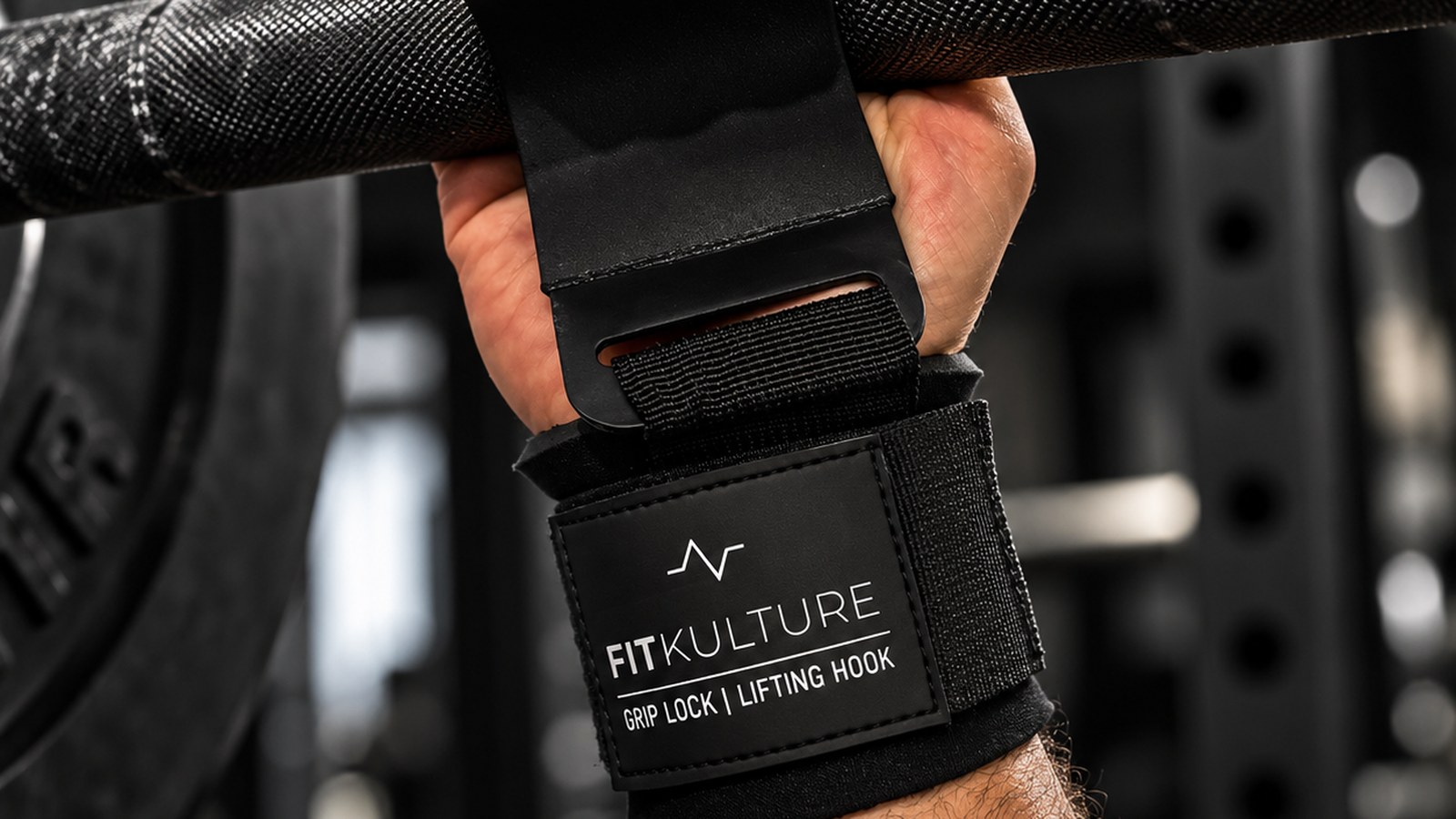
Lifting hooks typically combine an adjustable wrist cuff with a rigid, curved hook. The hook sits around the barbell or handle, helping support the load during pulling exercises and reducing how much gripping force your fingers need to provide.
Unlike traditional straps, which need to be wrapped around the bar, hooks can be positioned relatively quickly.
- Quick to use — no need to repeatedly wrap fabric around the bar.
- Grip assistance — reduces the demands on your fingers and forearms.
- Useful for pulling exercises — particularly rows, shrugs and certain deadlift variations.
- Wrist support — many designs include padded, adjustable wrist cuffs.
- Consistent setup — once adjusted, hooks are convenient between sets.
Hooks are especially useful when you want to focus on the target muscles rather than letting grip strength limit you. They don’t replace proper technique, and their rigid design may feel less natural than straps for some exercises.
What are lifting straps?
Lifting straps are usually made from durable cotton, nylon or other woven materials. They loop around your wrists, with the remaining material wrapped around a bar or handle to reinforce your grip. They’ve been used in strength training for decades by bodybuilders, powerlifters and recreational gym-goers.
- Flexible design — wraps around different bars and handles.
- Strong grip assistance — helps you keep contact with the bar during demanding sets.
- Lightweight — easy to carry in a gym bag.
- Versatile — suits deadlifts, rows, Romanian deadlifts and other pulls.
- Affordable — traditional straps are relatively inexpensive.
The main drawback is that straps take practice to wrap correctly, and they need more setup between exercises than most hooks.
Lifting hooks vs lifting straps: key differences
Neither option is automatically better for everyone. The best choice depends on your training style, exercise selection and personal comfort.
- Design — hooks: rigid curved hook with wrist cuff; straps: flexible fabric wrapped around the bar.
- Setup — hooks: generally quick; straps: require wrapping.
- Grip assistance — both: yes.
- Flexibility — hooks: limited by hook shape; straps: adapt to many bars and handles.
- Wrist padding — hooks: common; straps: depends on design.
- Best suited to — hooks: rows, shrugs and controlled pulls; straps: deadlifts, rows and varied pulling exercises.
- Feel — hooks: more structured; straps: more direct contact with the bar.
Are lifting hooks or straps better for deadlifts?
Deadlifts place considerable demands on your grip as the weight increases. If your grip fails before your legs, back and hips are challenged, grip assistance helps you keep training those larger muscle groups.
Using lifting hooks for deadlifts
Hooks may be useful during controlled deadlift variations, especially when grip fatigue stops you completing planned reps. The rigid hook changes how the bar is supported, and some lifters prefer the feel of straps for heavy deadlifts. Only use hooks with exercises and loads permitted by the manufacturer’s instructions.
Using lifting straps for deadlifts
Straps are popular for deadlifts because they wrap closely around the bar and give a secure-feeling connection. Many lifters prefer them for heavy Romanian deadlifts and high-rep sets.
Our view: for heavy deadlift training, traditional lifting straps are often the more versatile option. Lifting hooks can be a convenient alternative for suitable controlled pulling exercises.
Which is better for back training?
Back training is where lifting hooks can be particularly convenient. Rows and shrugs often involve multiple sets, different weights and frequent equipment changes — and tired forearms make it harder to hit your intended volume for lats, traps and upper back.
Barbell rows
Both help when your grip fatigues. Hooks may be quicker to position; straps give a more flexible connection to the bar.
Dumbbell shrugs
Hooks can be convenient for shrugs, where the aim is to challenge the traps without grip fatigue cutting sets short. Make sure the hook suits the dumbbell handle and stays properly seated throughout.
Lat pulldowns and cable rows
Depending on the handle, both may help. Straps generally offer more flexibility across attachments; hooks are convenient with compatible handles.
Pull-ups
Some athletes prefer to train pull-ups unassisted to build grip strength. If you’re considering hooks or straps, check the product is specifically suitable — never assume every lifting hook is designed for suspended bodyweight movements.
Do lifting hooks make your grip weaker?
Not automatically. But if you use grip assistance on every pulling exercise, your hands and forearms get less grip-specific training.
A balanced approach: do lighter warm-up sets without assistance, then use hooks or straps on selected working sets when grip fatigue would otherwise limit your main goal.
When should you use lifting hooks?
They’re less suitable when an exercise demands unrestricted hand movement, rapid release or a grip position the hook can’t safely accommodate.
- Your forearms regularly fatigue before your back muscles.
- You do frequent rows, shrugs and controlled pulling exercises.
- You prefer a quicker setup than wrapping straps.
- You want an adjustable padded wrist cuff.
- You want grip assistance during selected working sets.
FIT KULTURE Grip Lock Lifting Hooks
Our FIT KULTURE Grip Lock Lifting Hooks combine a curved hook design with adjustable padded wrist straps, designed to provide extra grip assistance during compatible pulling exercises so you can concentrate on your training when your hands and forearms begin to fatigue.
- Curved lifting hooks for grip assistance
- Adjustable wrist straps
- Padded wrist cuffs
- Black design with FIT KULTURE branding
- Supplied as a pair
How to choose between lifting hooks and straps
1. What exercises do you perform most often?
Heavy deadlifts across a variety of bars: straps may offer more flexibility. Mainly controlled rows and shrugs: hooks may be more convenient.
2. Do you prefer convenience or flexibility?
Hooks are often faster to position; straps take a little longer but adapt to a wider range of equipment.
3. Are you training grip or another muscle group?
If grip strength is your goal, train without assistance for at least some of your work. If you’re targeting your back and grip is holding you back, either accessory may help.
Final verdict
Choose lifting hooks if you value convenience, padded wrist support and grip assistance during compatible rows, shrugs and controlled pulls. Choose lifting straps if you want a flexible accessory for a broad range of pulling exercises, particularly deadlift variations.
The right choice is the one that suits your exercises, feels comfortable and lets you train safely and consistently. Train with purpose. Build strength. FIT KULTURE.
Frequently asked questions
Are lifting hooks better than lifting straps?
Not necessarily. Hooks offer convenience and a structured design, while straps provide flexibility and are widely used for heavy pulling exercises.
Can beginners use lifting hooks?
Beginners can use suitable lifting accessories, but should first learn correct technique, understand safe equipment setup and build their natural grip strength.
Are lifting hooks good for shrugs?
They can be useful for shrugs because they reduce the demands on your fingers when holding compatible dumbbells or barbells.
Should I use lifting straps for every deadlift set?
Usually there’s value in completing at least some training without straps, especially if developing grip strength matters to you.
Can lifting hooks help with grip fatigue?
Yes. Their purpose is to provide additional grip assistance, which may help stop grip fatigue ending a set before the target muscles have been sufficiently trained.
SHOP THE ARTICLE